The Spaces That Shape Us
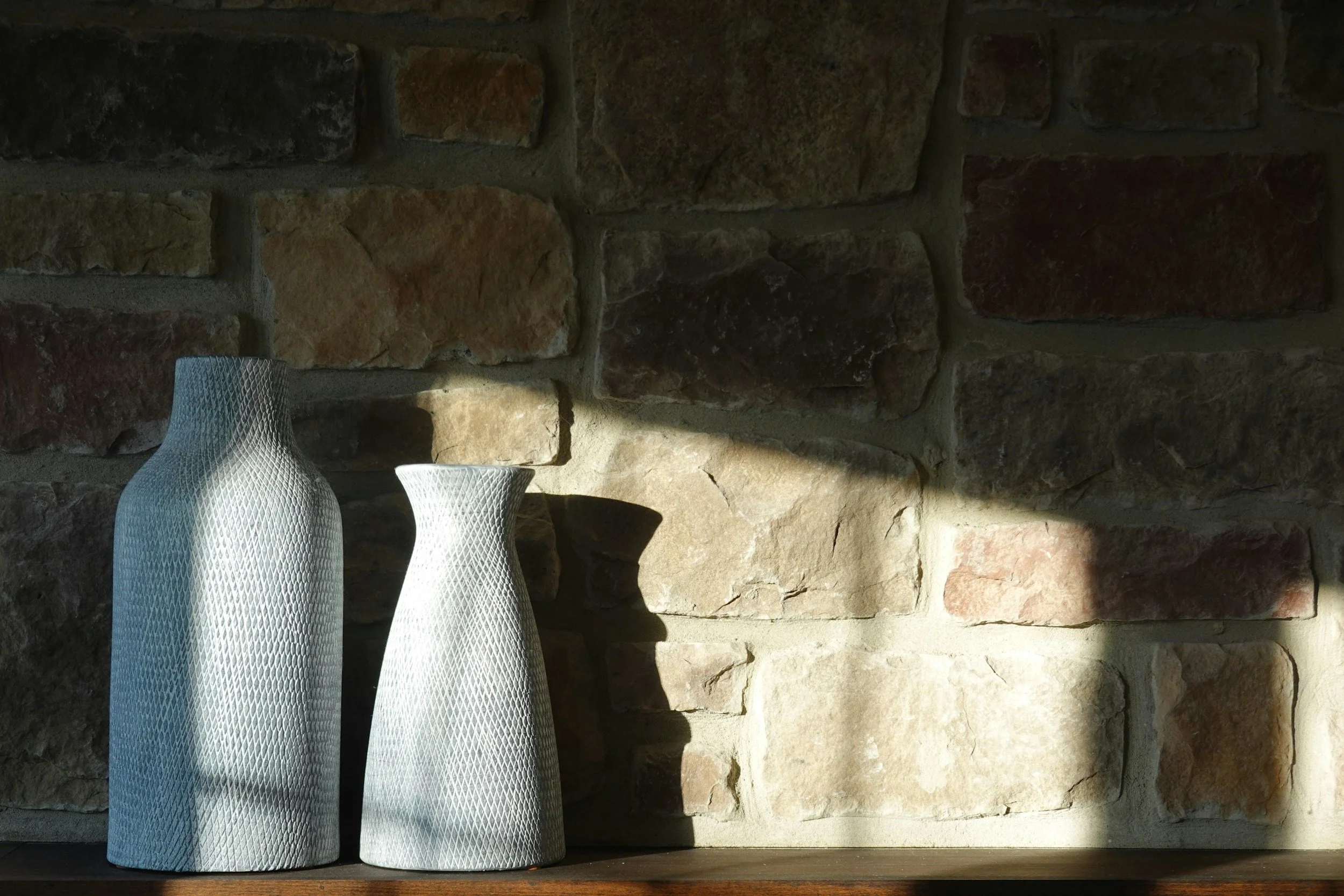
The spaces we inhabit are not neutral.
They influence how attention moves.
How the body settles.
What feels possible within a day.
Long before intention becomes conscious, environment has already established the conditions we respond to.
This is why certain rooms feel heavy while others feel supportive — often without explanation.
The body registers alignment before the mind names it.
Environment as a Regulating Force
A space does not need to be chaotic to be depleting.
Excess is often subtle.
Visual noise accumulates gradually.
Misalignment becomes normalized.
Clutter is only one form of interference.
So are unresolved objects — things without function, without placement, without relevance. So are rooms arranged for appearance rather than use. So are spaces that ask nothing of us except endurance.
When environment is misaligned, the body compensates.
Shoulders tighten.
Breath shortens.
Attention fragments.
When it is supportive, the body relaxes.
Not because the space is perfect.
Because it is coherent.
Coherence reduces vigilance.
And reduced vigilance is regulation.
Subtraction Before Addition
Change rarely begins with acquisition.
More often, it begins with removal.
Objects carry context.
Some tether attention to earlier versions of life.
Some quietly demand energy without offering anything in return.
Some remain not from usefulness, but from inertia.
Editing a space is not about restraint.
It is not about aesthetic purity.
It is about relief.
Relief from visual interruption.
Relief from decisions that must be made repeatedly.
Relief from maintaining what does not sustain.
What remains after careful removal often reveals what the space was meant to support all along.
The function becomes clearer when interference is reduced.
Function Before Appearance
A well-considered space does not perform beauty.
It performs support.
The essential question is not:
How does this look?
It is:
How does this allow me to move?
To rest?
To think?
To return?
When function leads, aesthetic coherence follows naturally.
Calm emerges not from decoration, but from alignment.
A chair placed where light falls correctly.
A desk that invites use rather than avoidance.
A corner that allows quiet without negotiation.
Beauty, in this sense, is the byproduct of suitability.
When something belongs where it is, the body knows.
Small Anchors, Real Impact
Not every environment needs to be transformed.
Often, a single reliable anchor is enough.
A chair consistently used for reading.
A desk cleared and maintained.
A mat unrolled in the same place each morning.
These modest, intentional spaces regulate by offering return.
Return is what the nervous system recognizes as safety.
When you know where something happens, energy is conserved.
Decision fatigue lessens.
Attention stabilizes.
Movement becomes smoother.
Anchors create continuity.
Continuity reduces strain.
Space as Stewardship
To curate a space is to take responsibility for what repeatedly shapes experience.
This is stewardship.
Not control.
Not perfection.
Tending.
It is the quiet acknowledgment that what surrounds you will either support regulation or subtly erode it.
Over time, a supportive environment does something consequential.
It reduces the effort required to remain steady.
You do not have to brace against your own surroundings.
You do not have to override discomfort.
The space carries part of the load.
A Space That Gives Back
When space is aligned, it does not demand performance.
It does not ask to be maintained constantly.
It does not compete for attention.
It does not create friction.
It gives back.
It gives back time.
It gives back attention.
It gives back ease.
A well-stewarded space is not impressive.
It is sustaining.
And a life sustained by its environment feels quieter from the inside.
Not because nothing is happening.
Because nothing unnecessary is.
